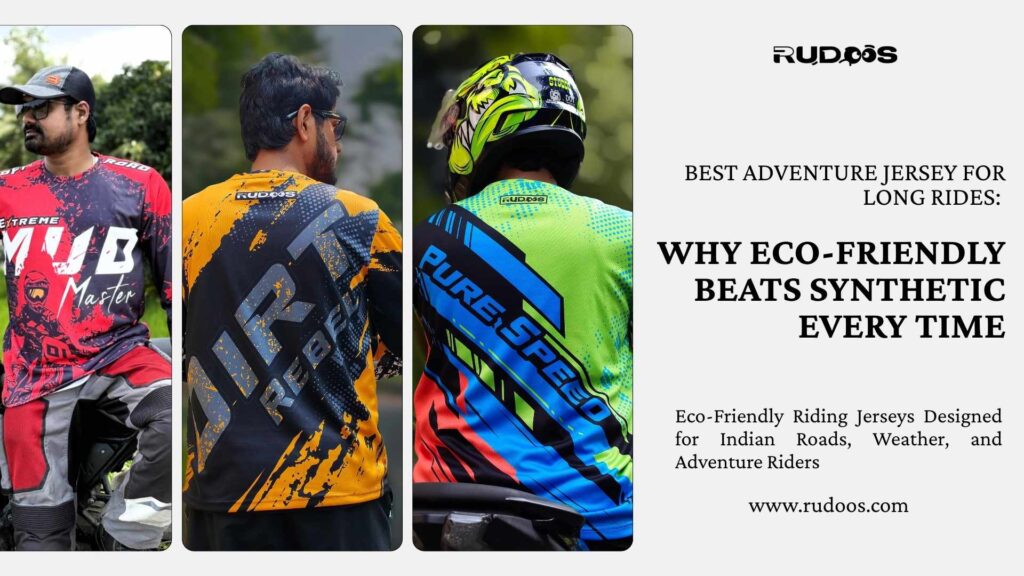
Best Adventure Jersey for Long Rides: Why Eco-Friendly Beats Synthetic Every Time
Looking for the best adventure jersey that doesn’t cost the Earth? You’re not alone. More riders across India are asking the same question as they pack for their next Himalayan trip or weekend ride to Lonavala. The adventure community is changing, and honestly, it’s about time we talked about what we wear on these journeys. Why Your Riding Gear Matters More Than You Think Remember that synthetic jersey you bought three years ago? The one that still smells weird even after washing? Here’s something most brands won’t tell you, that piece is probably shedding microplastics into our rivers every time you wash it. And considering how much we ride in India, from the Western Ghats to Ladakh, that adds up fast. The outdoor industry has a dirty secret. Traditional adventure clothing production uses massive amounts of water, harsh chemicals, and petroleum-based fabrics. A single polyester jersey can take up to 200 years to decompose. That’s longer than your great-great-grandchildren will be alive. But here’s the good news, sustainable adventure clothing has come a long way. Today’s eco-friendly options perform just as well, if not better, than conventional gear. You don’t have to choose between protecting nature and riding comfortably anymore. What Makes Adventure Clothing Actually Sustainable? Let’s cut through the greenwashing. Real sustainable adventure gear isn’t just about slapping a green leaf logo on the tag. It’s about the entire lifecycle of the product. Natural and Recycled Materials: The best riding jersey options today use organic cotton, bamboo, hemp, or recycled polyester. These materials reduce water consumption by up to 90% compared to conventional fabrics. Brands like Rudoos are leading this shift in India by using sustainable materials that actually work for our climate. Ethical Manufacturing: Where and how your jersey is made matters. Local production reduces carbon emissions from shipping. Fair wages and safe working conditions aren’t extras, they’re essentials. When you buy from brands manufacturing in India, you’re cutting down transportation emissions significantly. Durability Over Disposability: A truly sustainable jersey lasts years, not months. Better stitching, reinforced panels, and quality fabrics mean you buy less often. This is the opposite of fast fashion’s business model, and that’s exactly the point. The Performance Question Everyone Asks “Will eco-friendly gear hold up on long rides?” I hear this constantly. Last monsoon, I rode from Pune to Goa in a sustainable adventure jersey. Through rain, heat, and 400 kilometers of varied terrain, it performed flawlessly. The moisture-wicking worked better than my old synthetic ones, and the natural fibers didn’t trap odors. The best road bike jersey isn’t always the most technical-sounding one with a dozen synthetic ingredients you can’t pronounce. Sometimes it’s simpler than that. Bamboo fabric, for instance, is naturally antimicrobial and temperature-regulating. It keeps you cool in Rajasthan summers and comfortable during early morning rides in the hills. Modern sustainable jerseys handle everything you throw at them. Quick-drying properties, UV protection, breathability, all without relying solely on synthetic materials. The technology has evolved dramatically in the past five years. Real Talk About Indian Riding Conditions India isn’t Europe. We ride in 45-degree heat through dusty highways. We face sudden monsoons. We navigate everything from beach roads to mountain passes in a single trip. Your gear needs to handle this variety. Traditional synthetic jerseys might wick sweat, but they turn into portable saunas in Indian heat. They also retain smells like nobody’s business. After a long ride from Mumbai to Nashik in summer, you basically need to burn those jerseys (please don’t, they release toxic fumes). Natural fiber jerseys breathe differently. They allow actual airflow instead of just moving moisture around. On the Leh-Manali highway last summer, riders wearing organic cotton blends reported feeling significantly cooler than those in synthetic gear. The difference is real and measurable. Features That Actually Matter for Adventure Riding When you’re looking for the best adventure jersey, forget the marketing fluff. Focus on these practical features: Moisture Management: You need fabric that doesn’t just move sweat but actually allows your skin to breathe. Bamboo and merino wool excel here naturally. They dry fast but don’t feel clammy like polyester. Odor Resistance: Multi-day rides mean limited washing opportunities. Natural antimicrobial properties in organic materials keep you fresher longer. You can wear a quality bamboo jersey for three days straight without offending your riding buddies. Temperature Regulation: Indian weather is unpredictable. Morning starts in Spiti are freezing; afternoons are scorching. Natural fibers adapt to temperature changes better than synthetics. They keep you warm when cold and cool when hot. Durability for Long Distances: A lightweight riding shirt should survive thousands of kilometers. Reinforced seams, quality stitching, and robust fabric weave matter more than fancy brand names. The Rudoos jersey collection focuses on exactly this, gear that lasts. The Economics of Sustainable Choices “Sustainable is expensive.” I’ve heard this a hundred times. Let’s break down the actual math with real numbers. A cheap synthetic jersey costs ₹800 and lasts maybe one season of regular riding. You buy four over two years, that’s ₹3,200. A quality jersey like those from Rudoos costs ₹1,099-₹1,199 but lasts three years easily. You save money and reduce waste. Here’s the reality check: at ₹1,099, you’re getting a jersey with 170 GSM poly mesh fabric, fade-proof printing, and construction that handles Indian road conditions. Compare this to buying three cheap jerseys at ₹800 each over the same period. The math is simple. Plus, consider the hidden costs. Cheaper jerseys wear out faster, lose color in a few washes, and need replacing constantly. They’re not actually cheaper, they just spread the cost differently. Real value isn’t about the price tag; it’s about cost per wear over the product’s lifetime. Indian riders are smart about value. We maintain our bikes meticulously, plan our routes carefully, and invest in reliable gear. Applying the same logic to clothing makes perfect sense. How Indian Adventure Brands Are Leading Change The global outdoor industry is slowly waking up to sustainability. But some Indian brands saw this coming years ago