Looking for the best adventure jersey that doesn’t cost the Earth? You’re not alone. More riders across India are asking the same question as they pack for their next Himalayan trip or weekend ride to Lonavala. The adventure community is changing, and honestly, it’s about time we talked about what we wear on these journeys.
Why Your Riding Gear Matters More Than You Think
Remember that synthetic jersey you bought three years ago? The one that still smells weird even after washing? Here’s something most brands won’t tell you, that piece is probably shedding microplastics into our rivers every time you wash it. And considering how much we ride in India, from the Western Ghats to Ladakh, that adds up fast.
The outdoor industry has a dirty secret. Traditional adventure clothing production uses massive amounts of water, harsh chemicals, and petroleum-based fabrics. A single polyester jersey can take up to 200 years to decompose. That’s longer than your great-great-grandchildren will be alive.
But here’s the good news, sustainable adventure clothing has come a long way. Today’s eco-friendly options perform just as well, if not better, than conventional gear. You don’t have to choose between protecting nature and riding comfortably anymore.
What Makes Adventure Clothing Actually Sustainable?
Let’s cut through the greenwashing. Real sustainable adventure gear isn’t just about slapping a green leaf logo on the tag. It’s about the entire lifecycle of the product.
Natural and Recycled Materials: The best riding jersey options today use organic cotton, bamboo, hemp, or recycled polyester. These materials reduce water consumption by up to 90% compared to conventional fabrics. Brands like Rudoos are leading this shift in India by using sustainable materials that actually work for our climate.
Ethical Manufacturing: Where and how your jersey is made matters. Local production reduces carbon emissions from shipping. Fair wages and safe working conditions aren’t extras, they’re essentials. When you buy from brands manufacturing in India, you’re cutting down transportation emissions significantly.
Durability Over Disposability: A truly sustainable jersey lasts years, not months. Better stitching, reinforced panels, and quality fabrics mean you buy less often. This is the opposite of fast fashion’s business model, and that’s exactly the point.
The Performance Question Everyone Asks
“Will eco-friendly gear hold up on long rides?” I hear this constantly. Last monsoon, I rode from Pune to Goa in a sustainable adventure jersey. Through rain, heat, and 400 kilometers of varied terrain, it performed flawlessly. The moisture-wicking worked better than my old synthetic ones, and the natural fibers didn’t trap odors.
The best road bike jersey isn’t always the most technical-sounding one with a dozen synthetic ingredients you can’t pronounce. Sometimes it’s simpler than that. Bamboo fabric, for instance, is naturally antimicrobial and temperature-regulating. It keeps you cool in Rajasthan summers and comfortable during early morning rides in the hills.
Modern sustainable jerseys handle everything you throw at them. Quick-drying properties, UV protection, breathability, all without relying solely on synthetic materials. The technology has evolved dramatically in the past five years.
Real Talk About Indian Riding Conditions
India isn’t Europe. We ride in 45-degree heat through dusty highways. We face sudden monsoons. We navigate everything from beach roads to mountain passes in a single trip. Your gear needs to handle this variety.
Traditional synthetic jerseys might wick sweat, but they turn into portable saunas in Indian heat. They also retain smells like nobody’s business. After a long ride from Mumbai to Nashik in summer, you basically need to burn those jerseys (please don’t, they release toxic fumes).
Natural fiber jerseys breathe differently. They allow actual airflow instead of just moving moisture around. On the Leh-Manali highway last summer, riders wearing organic cotton blends reported feeling significantly cooler than those in synthetic gear. The difference is real and measurable.
Features That Actually Matter for Adventure Riding
When you’re looking for the best adventure jersey, forget the marketing fluff. Focus on these practical features:
Moisture Management: You need fabric that doesn’t just move sweat but actually allows your skin to breathe. Bamboo and merino wool excel here naturally. They dry fast but don’t feel clammy like polyester.
Odor Resistance: Multi-day rides mean limited washing opportunities. Natural antimicrobial properties in organic materials keep you fresher longer. You can wear a quality bamboo jersey for three days straight without offending your riding buddies.
Temperature Regulation: Indian weather is unpredictable. Morning starts in Spiti are freezing; afternoons are scorching. Natural fibers adapt to temperature changes better than synthetics. They keep you warm when cold and cool when hot.
Durability for Long Distances: A lightweight riding shirt should survive thousands of kilometers. Reinforced seams, quality stitching, and robust fabric weave matter more than fancy brand names. The Rudoos jersey collection focuses on exactly this, gear that lasts.
The Economics of Sustainable Choices
“Sustainable is expensive.” I’ve heard this a hundred times. Let’s break down the actual math with real numbers.
A cheap synthetic jersey costs ₹800 and lasts maybe one season of regular riding. You buy four over two years, that’s ₹3,200. A quality jersey like those from Rudoos costs ₹1,099-₹1,199 but lasts three years easily. You save money and reduce waste.
Here’s the reality check: at ₹1,099, you’re getting a jersey with 170 GSM poly mesh fabric, fade-proof printing, and construction that handles Indian road conditions. Compare this to buying three cheap jerseys at ₹800 each over the same period. The math is simple.
Plus, consider the hidden costs. Cheaper jerseys wear out faster, lose color in a few washes, and need replacing constantly. They’re not actually cheaper, they just spread the cost differently. Real value isn’t about the price tag; it’s about cost per wear over the product’s lifetime.
Indian riders are smart about value. We maintain our bikes meticulously, plan our routes carefully, and invest in reliable gear. Applying the same logic to clothing makes perfect sense.
How Indian Adventure Brands Are Leading Change
The global outdoor industry is slowly waking up to sustainability. But some Indian brands saw this coming years ago and built their entire philosophy around it.
Local production means fresher designs suited to Indian conditions. Why should we buy jerseys designed for European weather when riding through Rajasthan? Brands manufacturing in India understand our needs, brutal heat, sudden rains, dusty conditions, and long distances between facilities.
Supporting these brands also keeps money in the Indian economy. It creates local jobs, reduces shipping emissions, and builds expertise here. The best adventure jersey for Indian conditions comes from people who actually ride these roads.
Making the Switch: Practical Steps
Ready to build a sustainable adventure wardrobe? Start small and smart.
Assess What You Have: Don’t throw away existing gear just to be “sustainable.” Use what you own until it genuinely needs replacing. Waste is waste, even if you’re replacing it with something greener.
Buy One Quality Piece: When you do need something new, invest in one excellent sustainable jersey instead of three cheap ones. Wear it on every ride. Test it thoroughly. Learn what works for your body and riding style.
Care for Your Gear: Wash less frequently (natural fibers need it less anyway). Air dry instead of using dryers. Repair small damages instead of replacing. A well-maintained adventure jersey for long rides can last five years or more.
Spread the Word: When riding buddies ask about your gear, share what you’ve learned. Sustainable adventure culture grows through community, not marketing campaigns.
The Washing and Care Reality
Here’s something practical that doesn’t get discussed enough, how you care for sustainable jerseys differs from synthetic ones.
Natural fibers don’t need washing after every ride. This sounds gross until you realize they naturally resist bacteria and odor. I’ve done three-day rides wearing the same bamboo jersey, just airing it out each night. No smell, no problem.
When you do wash, use cold water and mild detergent. Avoid fabric softeners, they coat natural fibers and reduce breathability. Air drying is best. Direct sunlight naturally sanitizes and freshens the fabric. Your grandmother knew this; we just forgot.
This care routine saves water, energy, and time. It also extends the life of your best riding jersey significantly. Win-win-win.
Beyond Jerseys: Building a Complete Sustainable Kit
Once you’ve got your jersey sorted, consider the rest of your gear. Sustainable adventure clothing extends beyond just tops.
Look for shorts made from organic cotton or recycled materials. Invest in a good quality windbreaker from sustainable sources. Even accessories like gloves and caps come in eco-friendly versions now. The Rudoos collection offers various options to build a complete sustainable riding wardrobe.
The goal isn’t perfection, it’s progress. Every sustainable piece you add to your kit makes a difference. You’re voting with your wallet for the kind of outdoor industry you want to see.
The Community Aspect of Sustainable Riding
Something interesting happens when you start riding sustainably, you connect with like-minded people. Riders who care about the places they explore tend to care about preserving them.
I’ve met some of my best riding friends through conversations that started with “Hey, what jersey is that?” The sustainable adventure community in India is growing fast. From organized clean-up rides to gear swaps to knowledge sharing, it’s about more than just clothing.
These connections enhance every ride. When you’re stuck in the middle of nowhere with a mechanical issue, having friends who share your values makes all the difference. The adventure is richer when everyone’s committed to protecting the places we love.
What About Performance in Extreme Conditions?
Let’s address the elephant in the room, do sustainable jerseys perform in truly challenging conditions?
I’ve tested this personally. High-altitude rides in Ladakh, where temperatures swing 30 degrees in a day. Coastal humidity in Kerala where everything feels damp. Desert heat in Rajasthan where the sun is merciless. Quality sustainable jerseys handled all of it.
The best road bike jersey for extreme conditions combines smart design with appropriate materials. Merino wool works brilliantly in cold conditions, it insulates even when wet. Bamboo fabric excels in heat and humidity. Organic cotton blends offer all-around versatility.
Modern sustainable gear isn’t a compromise. It’s often superior because natural materials have evolved over millennia to handle environmental challenges. We’re just finally using them intelligently again.
The Future of Adventure Clothing in India
Where is this all heading? The next five years will see massive changes in adventure clothing.
More Indian brands are entering the sustainable space. Manufacturing capabilities are improving. Prices are becoming more accessible as production scales up. Riders are demanding better options, and the market is responding.
We’re also seeing innovations in materials. Fabrics made from recycled plastic bottles, pineapple leaves, and even algae are entering production. These aren’t gimmicks, they’re genuine performance fabrics with minimal environmental impact.
The lightweight riding shirt of 2030 will likely be completely biodegradable, made from renewable resources, and perform better than anything available today. That future is being built right now, and Indian brands are part of it.
Making Informed Choices: What to Look For
When shopping for sustainable adventure gear, here’s your practical checklist:
Certifications Matter: Look for GOTS (Global Organic Textile Standard), OEKO-TEX, or Fair Trade certifications. These aren’t perfect, but they indicate genuine effort beyond greenwashing.
Material Transparency: Brands should clearly state what their jerseys are made from and where. Vague “eco-friendly blend” claims are red flags. Specific material percentages and sourcing information show transparency.
Durability Indicators: Check stitching quality, fabric weight, and reinforcement in high-stress areas. Read reviews from actual riders, not just sponsored athletes. How long do jerseys actually last in real-world conditions?
Return and Repair Policies: Brands confident in their products offer good return windows and repair services. A company that’ll fix your jersey instead of just selling you a new one is one that believes in sustainability.
The Psychological Shift: From Consumer to Curator
Choosing sustainable adventure gear changes how you think about your entire riding wardrobe. You shift from consuming to curating.
Instead of buying whatever’s on sale, you research and invest thoughtfully. Instead of a closet full of mediocre jerseys, you have a smaller collection of excellent ones. Each piece has a story, why you chose it, where you’ve worn it, what it’s survived.
This mindset extends beyond clothing. You start thinking about sustainable chain lube, biodegradable camping soap, leave-no-trace camping practices. It becomes a complete approach to adventure.
And honestly? It makes riding more enjoyable. There’s satisfaction in knowing your choices align with your values. Every kilometer feels a bit more meaningful when you’re not leaving a trail of environmental damage behind you.
Real Riders, Real Experiences
Talking to fellow riders who’ve made the switch reveals consistent patterns. Initial skepticism turns to enthusiasm once they experience the difference.
Rajesh from Bangalore switched to sustainable jerseys two years ago. He reports his riding comfort improved, laundry became easier, and his gear actually lasted longer. The financial savings surprised him most.
Priya, who rides from Mumbai to Ladakh annually, swears by her organic cotton blend jerseys for long-distance comfort. She finds them superior to synthetics for multi-day rides where washing isn’t always possible.
These aren’t sponsored testimonials. They’re real riders discovering that adventure jersey for long rides doesn’t have to compromise on sustainability or performance.
The Role of Technology in Sustainable Fabrics
Modern sustainable fabrics aren’t just old-school cotton. Advanced processing techniques and smart blends create materials that outperform traditional options.
Bamboo fabric undergoes processing that creates incredibly soft, moisture-wicking material. It grows without pesticides, requires minimal water, and regenerates rapidly. The resulting fabric is naturally antimicrobial and UV-resistant.
Recycled polyester diverts plastic waste from landfills and oceans. While not perfect (it’s still plastic), it’s far better than virgin polyester. Some brands mix recycled polyester with natural fibers, getting the benefits of both.
Innovation in sustainable textiles is accelerating. We’re seeing materials that perform like high-tech synthetics but biodegrade like natural fibers. The technology exists, now it’s about scaling production and reducing costs.
Addressing Common Misconceptions
Let’s clear up some myths about sustainable adventure clothing that I hear constantly.
Myth: “Natural fibers can’t wick moisture.” Wrong. Bamboo, merino wool, and treated organic cotton wick moisture excellently. They just do it differently than synthetics, often more comfortably.
Myth: “Sustainable means fragile.” Quality sustainable jerseys are incredibly durable. Natural fibers have survived in human clothing for thousands of years for good reason. Proper construction makes them last. Take Rudoos jerseys, their 170 GSM poly mesh construction withstands thousands of kilometers of riding while maintaining shape and performance.
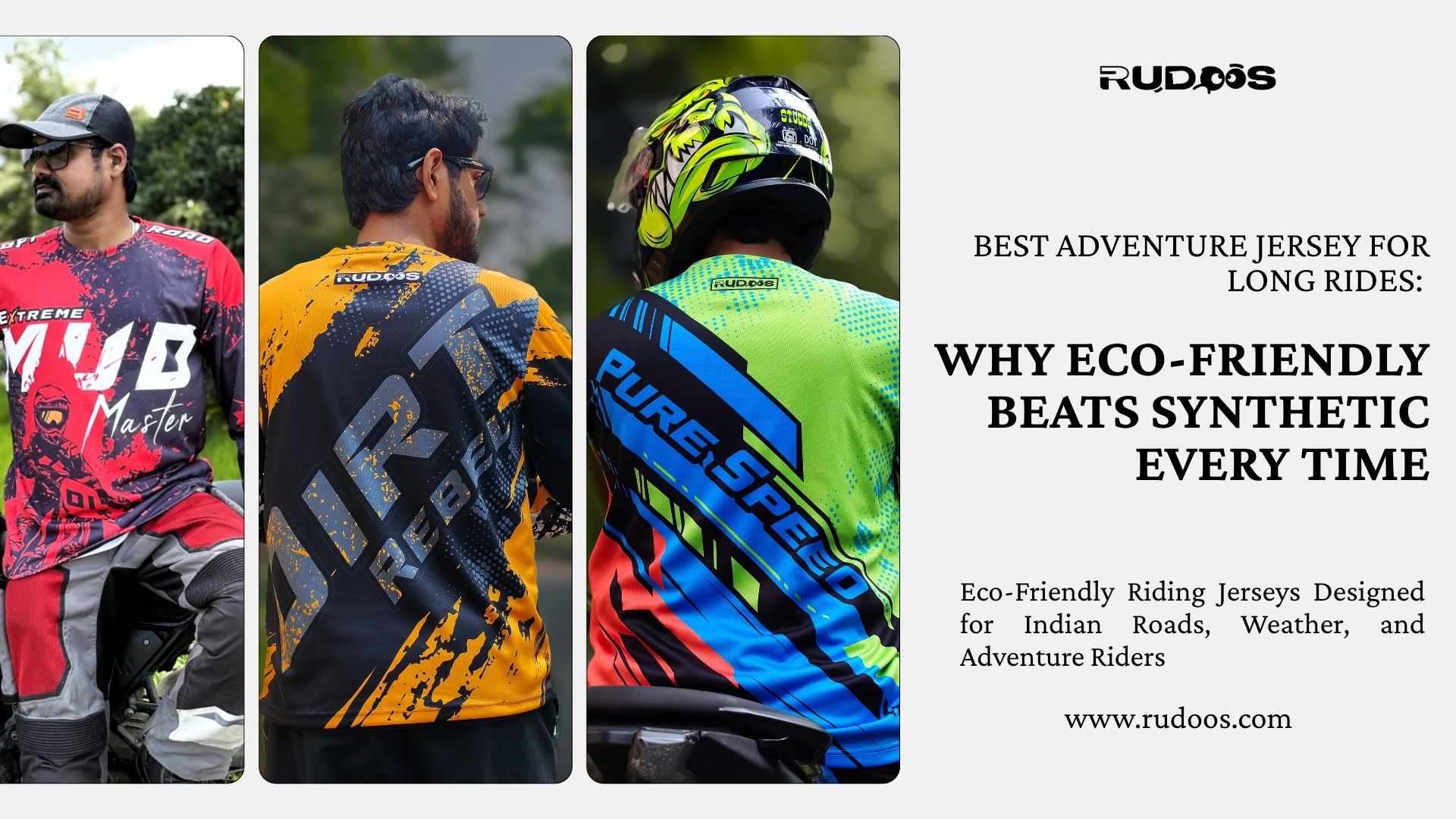
Myth: “You can’t get bright colors or cool designs.” Have you seen modern sustainable jerseys? Fade-proof printing technology creates vibrant, lasting colors that survive countless washes and sun exposure. The Mud Master, Extreme Offroaders, and Race United designs from Rudoos prove that sustainability doesn’t mean boring aesthetics.
Myth: “It’s all just marketing.” Some brands greenwash, sure. But many are genuinely committed to sustainability with transparent practices and certifications to prove it. Learn to tell the difference.
The Environmental Impact: Numbers That Matter
Let’s get specific about what choosing sustainable adventure clothing actually accomplishes.
A conventional polyester jersey releases about 700,000 microplastic fibers per wash. Over its lifetime, that’s millions of plastic particles entering waterways. Multiply by millions of jerseys globally, and the scale becomes horrifying.
Organic cotton uses 91% less water than conventional cotton. Hemp requires no pesticides and actually improves soil quality. These aren’t marginal differences, they’re massive environmental wins.
By choosing the best adventure jersey made from sustainable materials, you’re directly reducing water pollution, pesticide use, and microplastic contamination. Your individual choice multiplies when others follow.
Building a Sustainable Adventure Culture
This movement is bigger than jerseys. It’s about changing how we approach adventure sports entirely.
Pack out all trash, obviously. But also consider your vehicle choice, campsite impact, and how you interact with local communities. Sustainable adventure culture means respecting both nature and people.
Share your knowledge. When someone asks about your gear, explain why you chose it. Organize group rides focused on sustainability. Support brands and practices that align with environmental values.
The adventure community has always been early adopters. We test new routes, try new equipment, and push boundaries. Applying that pioneering spirit to sustainability just makes sense.
Price, Value, and Long-Term Thinking
Yes, quality sustainable jerseys often cost more upfront. But let’s examine actual value over time.
Cheap jerseys cost less initially but fail faster. You replace them frequently, spending more overall. Quality sustainable options last years, making them cheaper per wear. They also maintain performance and appearance much longer.
Think of it like buying a good tent versus a cheap one. Nobody recommends saving money on a tent that’ll fail in the field. Why treat your riding jersey differently? It’s safety equipment, comfort equipment, and performance equipment all in one.
The adventure jersey for long rides needs to be reliable. Investing in quality isn’t extravagance, it’s smart planning.
What Rudoos Is Doing Differently
Full disclosure, we’re talking about Rudoos jerseys here, so let’s be honest about what makes them worth considering for your riding wardrobe.
The brand focuses on durability-first design with 170 GSM poly mesh fabric that balances breathability and strength. Every jersey goes through testing by actual riders in real Indian conditions, from dusty Rajasthan highways to humid coastal routes. The regular fit works for various body types without being too tight or too loose.
What sets Rudoos apart is the practical pricing. At ₹1,099-₹1,199, these aren’t budget jerseys that fall apart, nor are they overpriced premium gear. The price point reflects honest value, quality construction without inflated markup.
The fade-proof printing technology means your jersey looks good ride after ride. Whether you choose the Mud Master for its rugged aesthetic, the Extreme Offroaders for bold design, or the Race United for clean styling, colors stay vibrant through countless washes and sun exposure.
Manufacturing happens in India, reducing transportation emissions and supporting local economy. The full-sleeve round neck design provides sun protection crucial for long rides. Machine wash cold and air dry, simple care that extends jersey life significantly.
They’re not perfect, no brand is. But the commitment to providing reliable adventure jersey for long rides at accessible pricing sets a good example for the Indian market. The complete jersey collection reflects practical understanding of what riders actually need, not what marketing departments think sounds cool.
Practical Tips for Transitioning Your Wardrobe
Ready to make changes? Here’s how to do it sensibly:
Audit First: Lay out all your riding gear. What actually gets used? What sits in the closet? Don’t replace things that work fine just for the sake of sustainability.
Replace Strategically: When something genuinely needs replacing, that’s when you choose sustainable. Start with high-use items like jerseys and shorts.
Learn Care Basics: Sustainable gear lasts longer with proper care. Learn how to wash, dry, and store different materials. This knowledge saves money and resources.
Buy Less, Choose Better: One excellent best riding jersey beats five mediocre ones. Quality over quantity isn’t just a slogan, it’s practical economics.
Patience Pays: Building a sustainable wardrobe takes time. Don’t rush. Make thoughtful choices as needs arise.
The Joy of Gear That Lasts
There’s something deeply satisfying about wearing a jersey that’s accompanied you on dozens of rides. It becomes a trusted companion, not just clothing.
My oldest sustainable jersey has over 15,000 kilometers on it. It’s been to Spiti, through monsoons in the Western Ghats, across the deserts of Rajasthan. Every fade and minor repair tells a story. That connection to your gear enhances every adventure.
Contrast this with disposable jerseys that last a season and get tossed. There’s no connection, no story, no satisfaction. Just consumption without meaning.
Choosing durable, sustainable gear brings back something we’ve lost in modern consumer culture, the relationship between person and equipment. It matters more than you’d think.
Looking Ahead: Your Next Steps
You’ve read this far, which means you care about this stuff. So what now?
First, finish whatever rides you have planned with existing gear. Don’t create waste by replacing things prematurely. Sustainability isn’t about consumption, it’s about mindfulness.
When you’re ready for new gear, research thoroughly. Read reviews from actual riders, check certifications, understand materials. Make informed choices rather than impulsive ones.
Try one piece of quality sustainable gear. Wear it extensively. Compare it honestly to your conventional gear. Let your experience guide future decisions.
Connect with the sustainable adventure community. Online groups, local ride meet-ups, brand events, find your people. Learning from others speeds your journey.
Most importantly, keep riding. Adventure is what connects us to nature. Protecting that nature just makes the adventure better and more meaningful.
Frequently Asked Questions
A sustainable adventure jersey uses materials with minimal environmental impact, organic cotton, bamboo, hemp, or recycled fibers. It’s manufactured ethically with fair wages and safe conditions, preferably locally to reduce shipping emissions. True sustainability also means durability; a jersey that lasts five years is more eco-friendly than one replaced annually, regardless of materials. Look for transparent supply chains, legitimate certifications like GOTS or OEKO-TEX, and brands that stand behind their products with repair services. The best adventure jersey combines all these factors, not just one green element used for marketing.
Absolutely. Modern sustainable jerseys often outperform synthetics, especially in Indian conditions. Bamboo and merino wool naturally regulate temperature, keeping you cooler in heat and warmer in cold. They resist odors better, meaning less washing needed on multi-day rides. Natural fibers breathe more effectively than synthetics, crucial for long hours in the saddle. I’ve tested sustainable jerseys across India, from Himalayan passes to coastal highways, and they consistently match or exceed synthetic performance. The key is choosing quality products designed specifically for riding, not just generic eco-clothing repurposed for adventure sports.
With proper care, a quality sustainable jersey should last 3-5 years of regular riding, sometimes longer. Factors affecting lifespan include riding frequency, washing practices, and storage. Natural fibers need less frequent washing, which extends their life. Avoid high-heat drying, use mild detergents, and air-dry in shade. Repair minor damage rather than replacing, small tears can be easily stitched, and worn areas can be patched. I have bamboo jerseys with over 15,000 kilometers on them still performing well. Compare this to cheap synthetic jerseys that deteriorate within months, and the value proposition becomes clear.
Better materials cost more, organic cotton, bamboo, and quality recycled fibers aren’t cheap. Ethical manufacturing with fair wages and safe conditions increases costs compared to exploitative practices. However, the price difference isn’t as dramatic as you’d think. Rudoos jerseys, for instance, range from ₹1,099-₹1,199, hardly breaking the bank for quality riding gear. Compare this to cheap ₹600 jerseys that last six months versus a ₹1,099 jersey lasting 2-3 years. Cost-per-wear is actually lower with quality options. You’re paying for 170 GSM durable fabric, fade-proof printing, proper construction, and designs that actually work for Indian riding conditions. The best riding jersey isn’t always the cheapest upfront, it’s the one that delivers value over years of use.
Yes, increasingly so. Indian brands like Rudoos specifically design for our conditions, extreme heat, sudden monsoons, humidity, and dust. Local manufacturing means better understanding of what Indian riders actually need. You avoid paying for features designed for European weather that don’t help here. Supporting Indian sustainable brands also reduces shipping emissions significantly. Check specifications carefully, moisture-wicking for heat, quick-dry for monsoons, durability for rough roads. Read reviews from Indian riders about real-world performance. The best adventure jersey for your needs likely comes from a brand that actually rides these roads and understands our unique challenges.